 RO
 EN
 IT
 DE
 FR
 ES
Front crowns
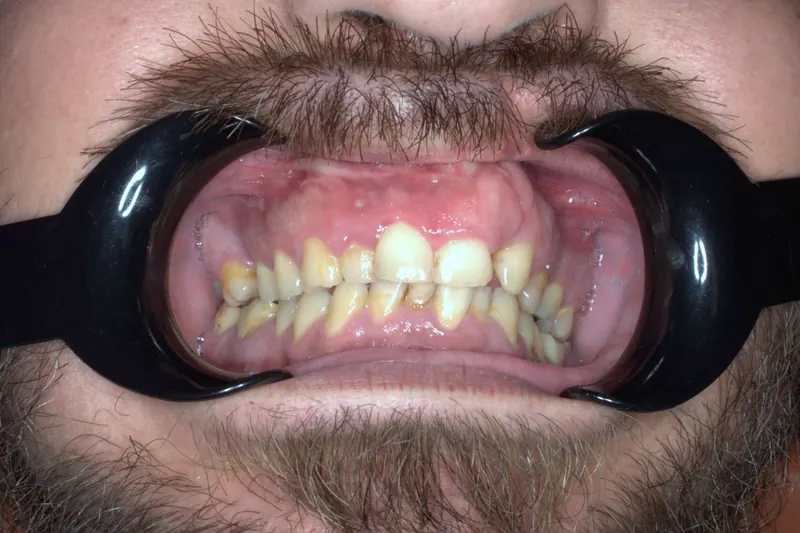
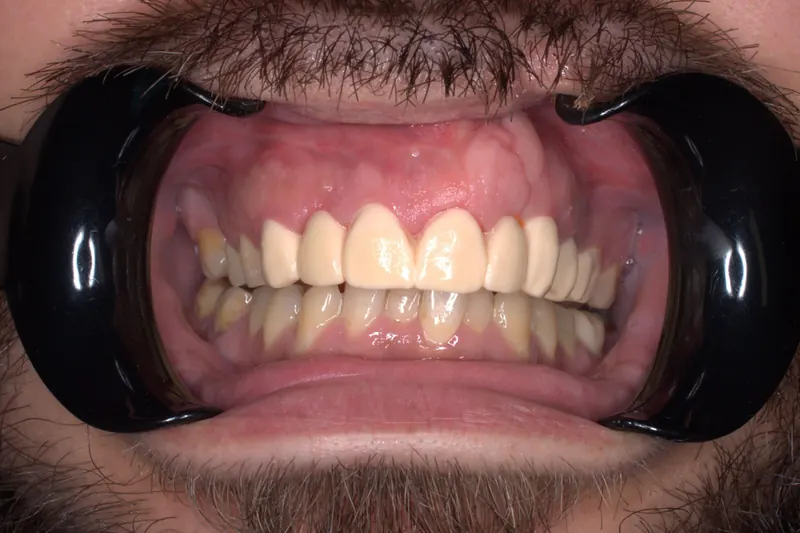
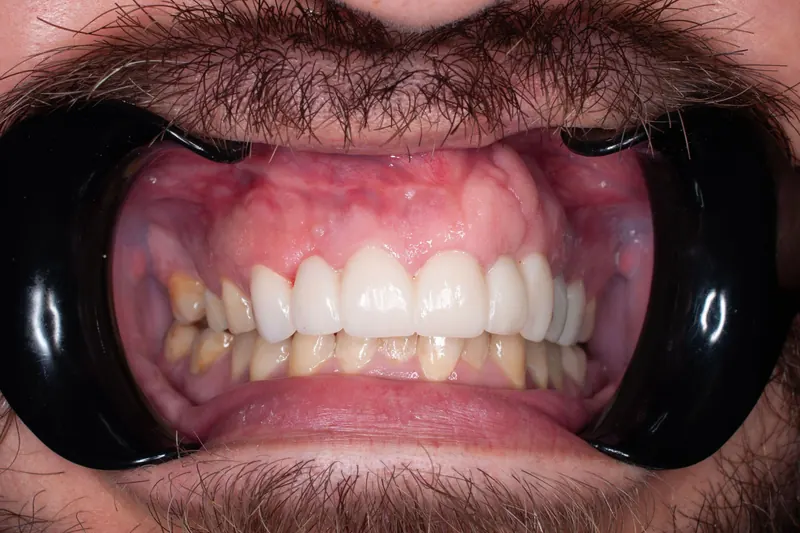
Worn front teeth restored with ceramic crowns. Their shape was first tested with a mock-up. From the first visit to the final work: about three months.


A denture replaces one or more missing teeth and can be removable (you take it out yourself to clean it), fixed (crowns and bridges cemented onto your teeth) or retained by implants. At Atelierul de Zâmbete Colordent in Sector 3, București, a full or partial acrylic denture costs 2,500 lei, a Valplast or Flexite flexible denture 4,500 lei, and a cobalt-chrome partial denture 1,500 euro. The right choice depends on how many teeth you have left, the condition of those teeth and of the bone, and how stable you want the result to be.
We know many patients put off getting a denture because they worry it will move, look artificial or be hard to get used to. That is why every denture starts with a full assessment and goes through a try-in, so you can see and feel your new teeth before the denture is finished.
Dentures replace lost teeth and the tissue around them. They restore three things at once: chewing, because without teeth digestion gets off to a poor start; speech, because some sounds are formed with the help of your front teeth; and support for your lips and cheeks, which would otherwise sink in and make your face look more tired.
There are three families of dentures. Removable dentures rest on the gums and, in the case of partials, on your remaining teeth, and you take them out every day to clean them: acrylic dentures, flexible dentures and cobalt-chrome partial dentures. Fixed prosthetics are crowns and bridges, permanently cemented onto prepared natural teeth, which you never take out. In between sit implant-retained dentures, also called overdentures: a denture that clips onto implants in the bone, using attachments or a bar, and no longer moves when you chew.
This page mainly covers removable dentures and fixed prosthetic work on natural teeth. Fully fixed implant rehabilitations, such as All-on-4 or All-on-6, are described in detail on our dental implant page.

Dentures are not only for people who have lost all their teeth. Here are the situations in which it is worth talking about prosthetic treatment.
When your back teeth are missing, you chew only on the remaining side, which wears down faster, and you start avoiding hard foods. A partial denture or a bridge restores support on both sides and spreads the chewing forces correctly.
For a jaw with no teeth, the options are a full acrylic denture, a full implant-retained denture or fully fixed work on implants. We talk openly about the advantages, limits and cost of each, depending on the bone available and your general health.
The bone under a denture shrinks over time, so a denture that fitted perfectly a few years ago starts to move, slip when you talk or cause sore spots. Often it does not need replacing: a reline or a repair brings it back into good shape. In other cases, when the denture teeth are worn or the base is cracked, a new denture is the right solution.
If you need a front tooth or several teeth removed, you do not have to live with a gap until the final work is ready. A temporary Kemeny denture is made in advance and worn during healing or while the implants integrate.
A tooth with less than half of it left needs a crown to protect it from fracturing. When a tooth is missing between two teeth that need crowns anyway, a bridge solves both problems at once.
What happens if you wait? The teeth next to the gap tilt towards it, and the ones in the opposite jaw drift down or up because they have nothing to bite against. Your bite becomes unbalanced, and areas that are hard to clean and new decay appear. The bone where the teeth are missing gradually shrinks, and the longer you wait, the harder it becomes to fit a denture or an implant. Missing back teeth also overload your front teeth, which can wear down or spread apart.
Each type of denture has a different role. Below you will find what each one is, who it suits and what it costs.

For jaws with no teeth at all. It is made from a pink acrylic base that mimics the gums, with artificial teeth set into it. The upper denture is held in place by suction of the base against the roof of your mouth, while the lower one rests on the bony ridge and the muscles, which is why it is usually less stable. Price: 2,500 lei.
For jaws with a few teeth remaining. It rests on the gums and clips onto your natural teeth with wire clasps. It is the most affordable removable option, it is easy to repair, and teeth can be added to it if you lose another one. Price: 2,500 lei.
It is made from an injection-moulded thermoplastic material, flexible and thin, with no metal clasps: it holds onto your teeth with gum-coloured extensions made of the same material. It is lighter, more discreet and more comfortable than an acrylic denture, and a good choice for patients who are allergic to acrylic. On the other hand, it is harder to repair and reline. Price: 4,500 lei.
It has a thin metal framework, cast in the laboratory, onto which acrylic teeth and gums are fitted. Because it rests on your natural teeth, not just on the gums, it is much more stable when you chew and covers less of the roof of your mouth than an acrylic denture. It is held in place either with cast clasps or with precision attachments, clips or slides hidden in crowns on the neighbouring teeth, which cannot be seen when you smile. The precision attachment option also requires crowns on the supporting teeth. Price: 1,500 euro.
For jaws with no teeth, especially the lower one, where a conventional denture moves the most. Two or more implants placed in the bone act as anchors, and the denture clips onto them with attachments or onto a bar. You take it out yourself to clean it, but it stays in place when you chew and talk. An implant-retained overdenture with precision attachments costs 2,500 euro, plus the implants. Sometimes your existing denture can be adapted to clip onto implants.
A small acrylic denture that replaces one or a few teeth while you heal after an extraction or after implant placement. It is a temporary solution for a few months, not a permanent one. Price: 300-500 lei.
Fixed work on natural teeth. A crown covers a broken-down tooth, while a bridge replaces one or more missing teeth by resting on the neighbouring teeth, which are prepared and covered with crowns. We work with porcelain-fused-to-metal crowns (850 lei per tooth) and zirconia crowns (1,500 lei per tooth), made from a digital scan. For front teeth, where appearance matters most, you can also read our cosmetic dentistry page.
There is no single best denture for everyone. There is the right denture for your mouth, your budget and how stable you want it to be. Here are the comparisons patients ask us about most often.
An acrylic denture is more rigid and bulkier and has metal clasps that may show, but it costs less, is easy to repair and can have teeth added. A flexible denture is thinner, has no visible metal and is more comfortable, but it costs more and is harder to repair. A flexible denture is especially suitable for front areas and for patients who care a lot about appearance.
A flexible denture rests more on the gums, so it can sink slightly when you chew. A cobalt-chrome denture transfers the force directly to your natural teeth through its metal framework, and it is more stable and thinner across the roof of your mouth. When several back teeth are missing, cobalt-chrome is usually the better long-term choice.
A removable denture is quicker and more affordable and does not need surgery. Implant-supported work, whether removable or fixed, no longer moves and helps preserve the bone, but it involves implants, healing time and a higher cost. If you are not ready for implants now, a well-made denture is a good solution, and implants can be added later.
A bridge is fixed and feels like your own teeth, but it needs healthy supporting teeth on either side of the gap, which are prepared for crowns. When the gaps are large or the teeth at the end of the jaw are missing, where there is no support behind, the solution is a partial denture or implants.
A good denture takes several visits, because each stage checks part of the fit: the shape of the gums, the bite, the look of the teeth. Here is what the journey looks like for a removable denture.
The dentist examines your gums, your remaining teeth and your old denture, if you have one, and takes the X-rays needed in the surgery. Any remaining teeth with decay or gum problems are treated first, so the denture has healthy support. You receive the plan and the estimate in writing.
A first impression is taken, then the laboratory makes a custom tray shaped to your mouth. This is used to take the final impression, which is much more precise and also records how your cheek and tongue muscles move. How well the denture sits depends on this precision.
The dentist sets the correct height of your bite and the position of your lips. Together you choose the shape, size and shade of the teeth, so they suit your face and look natural.
The teeth are set temporarily on a wax base and tried in your mouth. You look in the mirror, talk, close your mouth. This is the moment to mention anything you do not like: the position, the colour, how much of the teeth shows when you smile. Changes are made now, before the denture is finished.
You receive your finished denture, together with instructions on wearing and cleaning it. Over the first few weeks there are one or more short adjustment visits to ease any areas that press. These adjustments are a normal part of getting used to it, not a sign that the denture has not turned out well.
Under local anaesthetic, the supporting teeth are prepared and then scanned with an intraoral scanner. You go home with temporary work, so you are never without teeth.
The laboratory makes the work from the scan. At the try-in we check the fit, the bite and the colour, and adjust the work further if needed.
The crown or bridge is cemented permanently. The dentist checks your bite once more and shows you how to clean under the bridge, with floss or interdental brushes.
The prices below come from the clinic's price list. Before any treatment you receive an estimate, and the price on the estimate becomes our commitment.
The price is per arch.
An injection-moulded denture in flexible material, with no metal clasps.
With cast clasps or precision attachments. With precision attachments, the crowns on the supporting teeth are added to the cost.
An overdenture with precision attachments. The implants are charged separately, between 750 and 1,000 euro each.
For the healing period after an extraction or after implant placement.
The price is per tooth, so a three-unit bridge is priced as three crowns. An intraoral scan costs 250 lei.
A chairside reline costs 250-400 lei, a laboratory reline 300 lei, repairs (fractures, adding a clasp) 250-350 lei, and replacing the inserts or clips on an implant-retained denture 250-300 lei.
What affects the final cost? The type of denture, whether your remaining teeth need treatment first, whether supporting crowns or implants are needed and whether a temporary denture is used along the way. All of this appears on the estimate, so you know the total from the start.
Your first visit is a conversation and an assessment, not treatment. You tell us what bothers you: that you cannot eat certain foods, that your old denture moves or that you do not like how your smile looks. The dentist examines your gums, remaining teeth and bone, takes the X-rays needed in the surgery and, if you already wear a denture, checks that too. The consultation takes around 45 minutes and costs 150 lei with a general dentist or 250 lei with a specialist.
Bring your current denture, even if you no longer wear it, any older X-rays and a list of the medicines you take, especially anticoagulants or treatments for osteoporosis or diabetes. They matter when choosing the solution, particularly if implants are being considered.
You go home with the options that suit your case, explained in plain language, with the advantages, limits and price of each, and with a written estimate. The decision is yours, in your own time.

In the first few days the denture feels big, you produce more saliva and some words sound different. For most patients, getting used to it takes a few weeks. It helps to eat soft foods at first, cut into small pieces and chewed on both sides at once, and to read aloud so your tongue adjusts more quickly.
Speech usually returns to normal within a few days or weeks. Taste does not disappear, because your taste buds are on your tongue, but a full upper denture covers the roof of your mouth and may at first change how you sense temperature and texture. A cobalt-chrome denture, which is thinner in this area, affects the sensation less.
We recommend taking it out at night. Your gums need a few hours of rest without pressure, and the risk of irritation and fungal infections goes down. In the first few days after fitting, your dentist may ask you to wear it at night too, to identify the areas that press.
A well-fitted denture should not depend on adhesive. Some patients use it for extra confidence, especially with a full lower denture, and that is not a mistake. If you need more and more adhesive to keep the denture in place, it is a sign that the bone has shrunk and the denture needs relining.
Take it out and rinse it after meals. In the evening, brush it with a soft brush and soap or a special denture paste, not abrasive toothpaste, which scratches it. Overnight, keep it in a glass of water or cleaning solution. Brush your gums and remaining teeth too, because the denture's support depends on them.
A removable denture usually lasts several years, but your mouth changes over that time: the bone shrinks and the denture teeth wear down. When the denture starts to move or cause sore spots, a reline usually brings it back into shape. When the denture teeth are worn or the base is cracked, a new denture is made. An annual check-up lets these changes be spotted early.
Photos from treatments carried out here, step by step.
Worn front teeth restored with ceramic crowns. Their shape was first tested with a mock-up. From the first visit to the final work: about three months.


Worn, discoloured teeth restored with an extensive ceramic restoration, planned on a model of the arch.


Photos of the clinic’s patients, published with their consent. Results vary from case to case.
Because your denture is planned by dentists who work with prosthetics every day. Dentures and fixed work are coordinated by our specialists in prosthodontics, Dr. Cristina Drăguț and Dr. Rawan Al-Majali, who start from what you want to be able to do again: eat an apple, laugh without worrying, talk calmly on the phone.
Because all the options are discussed under one roof. If your remaining teeth need root canal treatment, an extraction or implants, the clinic's team does it here, in the right order, coordinated by Dr. Mihaela Garabagiu-Stanciu, a specialist in oral surgery with a qualification in implantology since 2004. This means you do not just get the solution one dentist offers, but the option that suits your case, including the path from a removable denture today to an implant-retained one later.
Since 2008 we have been the family clinic for many patients in Sector 3, and some of them now bring their parents and grandparents to us for dentures. You will find us at Strada Câmpia Libertății 42, next to Parcul IOR, close to Titan, Dristor and Vitan, Monday to Friday from 09:00 to 21:00. Book a consultation: we assess your case, explain your options and you leave with a clear estimate before any treatment.

At Atelierul de Zâmbete Colordent, a partial or full acrylic denture costs 2,500 lei, a Valplast or Flexite flexible denture 4,500 lei, and a cobalt-chrome partial denture 1,500 euro. An implant-retained denture costs 2,500 euro, plus the implants. The exact price appears on the estimate you receive before treatment.
There is no single best denture for everyone. For a jaw with no teeth, an implant-retained denture is the most stable and an acrylic denture the most affordable. When a few teeth remain, a cobalt-chrome denture usually offers the best stability among removable dentures, while a flexible one offers the most comfort and the most discreet appearance. The choice is made after an examination.
A removable denture usually takes 4-5 visits: consultation, impressions, bite registration, try-in and fitting, plus one or two adjustments afterwards. The total time depends on the type of denture and any treatment needed beforehand, and your dentist tells you from the start how many visits there will be.
In the first few days there may be areas that press and minor gum irritation, especially with a lower denture. These are sorted out at the adjustment visits, when the dentist eases the pressure points. Do not wait for a sore spot to go away on its own: come in for a check, as the adjustment takes a few minutes.
Yes, once you have got used to it. Start with soft foods, cut small and chewed on both sides at once, and gradually move on to harder foods. Very sticky foods and biting straight into hard fruit with your front teeth remain more difficult with a full denture, but much easier with an implant-retained denture.
A Kemeny denture is a small, temporary acrylic denture that replaces one or a few teeth straight after an extraction or while implants heal. You wear it for a few months, until the permanent work is ready, and it costs 300-500 lei.
For a lower denture that clips on with attachments, two implants are usually enough. For more stability, or for the upper jaw, where the bone is softer, more are needed. The exact number is decided after assessing the bone on an X-ray.
Yes, in most cases. A fractured base, a loose tooth or a broken clasp can be repaired in the laboratory, and a repair costs 250-350 lei. Do not try to glue the denture at home with household adhesives: they can distort the base and make the repair harder.
A reline means adding a new layer of material to the side of the denture that sits on your gums, so it fits again after the bone has shrunk. It is needed when the denture starts to move or cause sore spots. It can be done chairside (250-400 lei) or in the laboratory (300 lei).
We recommend an annual check-up, even if the denture seems fine. The dentist checks the fit, your bite and the condition of your gums and remaining teeth. If the denture moves, causes sore spots or has cracked, book an appointment sooner.
We assess your case with an X-ray taken on site and explain your options, with an estimate before treatment.