 RO
 EN
 IT
 DE
 FR
 ES
Fractured incisors
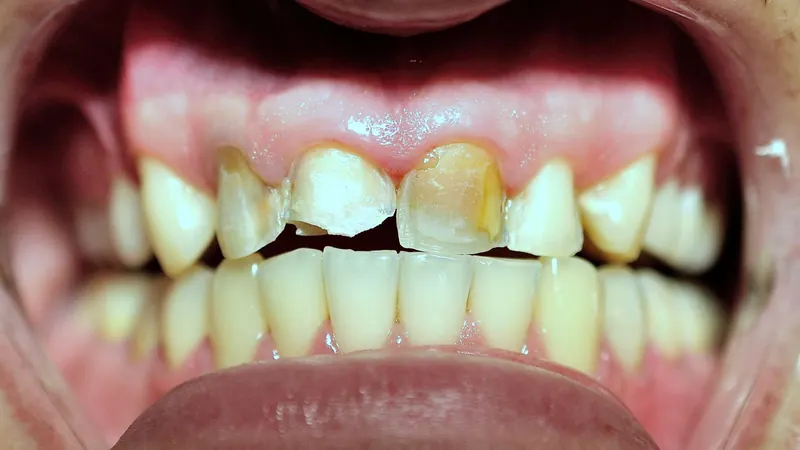
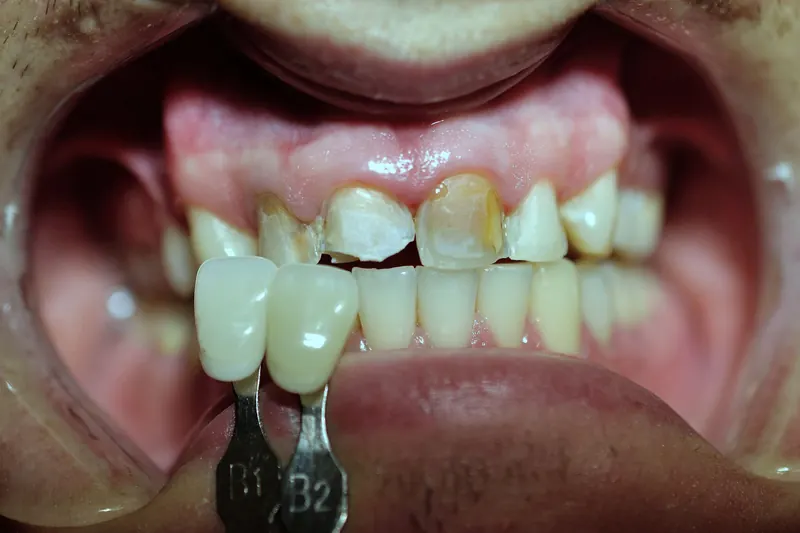
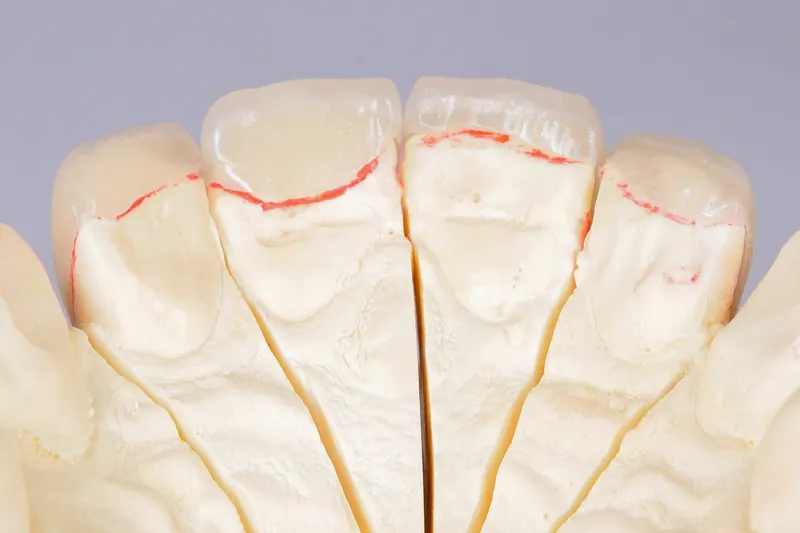
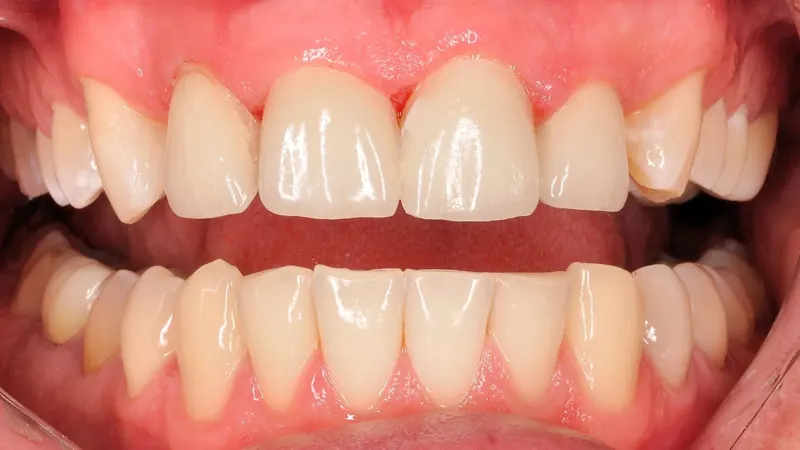
Two fractured central incisors restored with ceramic crowns: the shade is chosen at the try-in and the crowns are made in the laboratory.


A dental restoration rebuilds a tooth damaged by decay, a fracture or wear, so that it regains its shape, function and appearance. At Atelierul de Zâmbete Colordent in Sector 3, București, most restorations are done in a single appointment under local anaesthetic: a composite filling on one surface costs 300 lei, and one on several surfaces between 350 and 450 lei. For teeth with extensive damage we use laboratory-made inlays and onlays (1,700 lei), and when too little of the tooth is left, a crown.
The rule we follow is simple: we keep as much of your natural tooth as possible. Decay treated early means a small filling, a short appointment and a lower cost. The same decay left for a few months or years can reach the nerve and turn a 300 lei filling into root canal treatment followed by a crown.
Dental restorations are treatments that replace lost tooth tissue. Decay, the most common cause, is a bacterial infection that gradually dissolves the enamel and then the dentine, the softer layer underneath. The dentist removes the affected tissue, cleans the cavity and fills it with a material that bonds to the tooth and rebuilds its shape. The same principle applies to a tooth chipped in an accident or worn down over time.
There are two main categories. Direct restorations are made in the surgery in the same appointment: composite (white) fillings and glass ionomer fillings. Indirect restorations are made in the laboratory from an impression or a digital scan of the tooth and bonded at a second visit: inlays, onlays and crowns. The choice depends on how much tissue has been lost and on the chewing forces acting on the tooth.
Modern materials, composite and ceramic, bond adhesively to the tooth. Unlike old amalgam fillings, which needed larger cavities to stay in place, an adhesive restoration means only the diseased tissue has to be removed. The result matches the colour of your tooth and is hard to tell apart by eye. When decay has already reached the nerve, the restoration comes after root canal treatment under the microscope, and when the goal is purely cosmetic, for example the shape or colour of your front teeth, the conversation moves on to cosmetic dentistry.

Some signs are obvious, others only show up at a check-up or on an X-ray. Here are the situations in which it is worth booking an assessment.
Early decay does not hurt. You may see it as a brown or black spot, feel food always getting stuck in the same place, or your dentist may find it at a routine check-up, between the teeth, where you cannot see. This is the ideal time for treatment: the cavity is small, and so is the filling.
A short twinge with sweet or cold things that goes away straight away usually points to decay that has reached the dentine. If the pain lingers after the trigger has gone, comes on by itself or wakes you at night, the nerve may already be affected and you should be seen as soon as possible.
A fruit stone, a knock or biting on something hard can break off the edge of a tooth. A small chip can be rebuilt with composite on the same day. A large fracture that has taken off a whole cusp needs an inlay, an onlay or a crown. If you have kept the fragment, bring it in a glass of milk or saline: sometimes it can be bonded back on.
Fillings do not last for ever. Over time their edges can come away from the tooth, letting bacteria get underneath and cause secondary decay that cannot be seen from the outside. A darkened edge, a broken filling or a sharp edge you can feel with your tongue are all reasons for us to check it and replace it if needed.
Brushing too hard, acidic foods or grinding your teeth (bruxism) can wear away the enamel at the gum line or on the biting surfaces. The exposed areas become sensitive and decay more easily. We protect them with glass ionomer or composite fillings at the neck of the tooth, and if you grind your teeth at night we also recommend a protective night guard.
What happens if you wait? Decay does not stop by itself, nor does it heal. It moves towards the nerve, and when it gets there throbbing pain sets in and the treatment becomes root canal treatment, often followed by a crown. A chipped tooth left untreated can crack further down to the root, and then it sometimes cannot be saved. The earlier we step in, the smaller, quicker and cheaper the treatment.
For each tooth we choose the smallest restoration that will keep it strong in the long term. Here are the options, from the most conservative to the most extensive.

This is the most common restoration. Composite is a resin with ceramic particles, available in several shades, which the dentist matches to the colour of your tooth. The material is applied in thin layers, each one hardened with a special light, then shaped to the anatomy of the tooth; the bite is checked and the filling is polished. An appointment takes between 30 and 60 minutes. Price: 300 lei for one surface, 350-450 lei for several surfaces.
Glass ionomer (we use Fuji and Ketac) releases fluoride over time and bonds well even in areas that are hard to keep dry. We use it for decay at the neck of the tooth, as a base under a composite filling, for medium-term restorations or for patients at high risk of decay. Price: 150-200 lei.
When the cavity is large or the tooth has lost one or more cusps, a very large filling would be prone to cracking. The solution is an inlay or onlay: a piece made in the laboratory from composite or ceramic, from a digital scan of the tooth, and bonded with dedicated cements (Variolink or Panavia). An inlay fills the cavity, an onlay also covers the cusps. It is stronger than a large filling and preserves much more of the tooth than a crown. Price: 1,700 lei, over two appointments.
A root-treated tooth loses some of its elasticity and becomes more fragile. If enough tissue is left, it is rebuilt with composite. If the damage is extensive, a core build-up is done, with or without a glass fibre post anchored in the canal, which acts as a support for a protective crown. A core build-up starts from 350 lei.
When less than half of the tooth is left, no filling can protect it from fracturing any more. A crown covers it completely and takes the chewing forces. We work with porcelain-fused-to-metal crowns (850 lei) and zirconia crowns (1,500 lei), described in detail on our dentures page.
The steps vary slightly depending on the type of restoration. Here is what the two most common situations look like.
The dentist examines the tooth and, where needed, takes a digital X-ray in the surgery to see how deep the decay is and how close it has come to the nerve. You are told what comes next and what it costs before anything starts.
The area is numbed with a gel, then the local anaesthetic is given. After a few minutes you no longer feel pain, only vibration and pressure. For a very small, shallow cavity, anaesthetic is sometimes not even necessary, but the decision is yours.
The decayed tissue is removed and the healthy tissue is left untouched. The tooth is isolated from saliva, because composite only bonds to a clean, dry surface.
The adhesive is applied, then the composite, layer by layer, each one hardened with the light. The dentist rebuilds the original shape of the tooth: the cusps, the grooves and the contact point with the neighbouring tooth, so food does not get trapped between them.
Using articulating paper, we check that the filling is not higher than the rest of your teeth. Then we polish it until it is smooth and glossy. You can eat as soon as the anaesthetic wears off.
Under local anaesthetic, the dentist removes the decay or the old filling and prepares the tooth. It is then scanned with an intraoral scanner, without impression paste, and the digital file goes to the laboratory.
Until your second visit, the tooth is protected with a temporary filling. You can eat normally, avoiding very hard or sticky foods on that side.
At the second appointment, the inlay or onlay is tried in, adjusted and bonded. The dentist checks your bite and polishes the edges, so the join between tooth and restoration is smooth.
The prices below come from the clinic's price list. Before any treatment you receive an estimate, and the price on the estimate becomes our commitment.
For a small cavity on a single surface of the tooth: the biting surface, the front surface or the neck.
For decay that also involves the surfaces between the teeth. The price rises with the number of surfaces restored.
Ketac 150 lei, Fuji 200 lei. For the necks of teeth, base fillings or medium-term restorations.
Includes laboratory fabrication from a digital scan and adhesive bonding. The intraoral scan is charged separately, at 250 lei.
For root-treated teeth with extensive damage, with or without a glass fibre post.
A consultation with a general dentist costs 150 lei, with a specialist 250 lei. A periapical X-ray, taken in the surgery, costs 50 lei.
What affects the final cost? The number of teeth that need treatment, the size of each cavity and the right type of restoration. Anaesthetic is added when needed (35 lei per cartridge), and refinishing older fillings costs 75 lei. All of this appears on the estimate before we start, so you know the exact total from the beginning.
Your first visit starts with a conversation: what you are feeling, since when, and what treatment you have had so far. The dentist examines all your teeth, not just the one that is bothering you, and takes the X-rays needed right there in the surgery. The consultation takes around 30-45 minutes and costs 150 lei with a general dentist or 250 lei with a specialist.
Bring any older X-rays you have and a list of the medicines you take, especially anticoagulants or treatments for blood pressure and diabetes. If you are pregnant, tell your dentist from the start.
You go home with a clear treatment plan: which teeth need restoring, in what order, what type of restoration we recommend for each and what it costs. If it is a single small cavity and the schedule allows, we can even treat it at the same visit. If you are nervous about the dentist, tell us. We work at your pace, explain every step before we take it and stop whenever you raise your hand.

The size of the cavity decides. If the walls of the tooth are thick and the cusps intact, a composite filling is enough. If more than a third of the tooth is missing, or one or more cusps, a large filling risks cracking under chewing pressure, while an inlay or onlay, made in the laboratory in a single piece, holds up better.
A well-made, well-cared-for filling can last many years. How long depends on its size, the position of the tooth, your oral hygiene and your habits: grinding your teeth, biting your nails or cracking seeds shortens the life of any filling. Regular check-ups mean worn edges can be spotted early, before decay develops underneath.
Not automatically. An intact amalgam filling, with no cracks and no decay underneath, can stay in place. We recommend replacing it when the filling is cracked, when secondary decay appears or when the tooth has visible cracks around it. Many patients also choose to replace them for cosmetic reasons, and the decision is made together, after an examination.
A glass fibre post has an elasticity close to that of the tooth, is bonded adhesively and does not show through ceramic crowns, which is why we prefer it in most cases. A cast metal post remains an option when very little of the tooth's crown is left. A core build-up with a fibre post costs 350 lei, one with a metal post 450 lei.
No. Whitening only works on natural enamel, not on composite or ceramic. If you want to whiten your teeth, do that first, and the visible fillings at the front are redone afterwards in the new shade.
Yes. Treating decay during pregnancy is recommended, because an untreated infection carries more risk than the treatment. The most comfortable time is the second trimester. The local anaesthetic used in dentistry can be given during pregnancy, and X-rays are only taken if strictly necessary, with protection. Tell your dentist from the start that you are pregnant.
Composite is fully hardened by the end of the appointment, so you can eat as soon as the numbness wears off, usually after 2-3 hours. Mild sensitivity to cold for a few days is normal, especially after deep decay. If the filling feels high and knocks when you close your mouth, come back for an adjustment: it takes a few minutes and prevents pain.
Photos from treatments carried out here, step by step.
Two fractured central incisors restored with ceramic crowns: the shade is chosen at the try-in and the crowns are made in the laboratory.


Photos of the clinic’s patients, published with their consent. Results vary from case to case.
Because we treat the tooth, not just the cavity. Before any filling we look at everything that affects it: how close the decay is to the nerve, how the tooth bites, whether you grind your teeth at night, what the old fillings around it look like. We choose the smallest restoration that will last in the long term and explain why, on the X-ray, before we start.
Everything happens in the same clinic. If decay turns out to be deeper than it looked, our specialists in endodontics, Dr. Ahmad Rajah and Dr. Larisa Tiris, treat the canal under the Zeiss microscope. If the tooth needs an inlay, an onlay or a crown, our specialists in prosthodontics, Dr. Cristina Drăguț and Dr. Rawan Al-Majali, plan it from a digital scan. The team is coordinated by Dr. Mihaela Garabagiu-Stanciu, who holds a qualification in managing anxiety in dentistry, which helps patients who are nervous about the dentist.
Since 2008 we have been the family clinic for many patients in Sector 3. You will find us at Strada Câmpia Libertății 42, next to Parcul IOR, close to Titan, Dristor and Vitan, Monday to Friday from 09:00 to 21:00. Book a consultation: we assess your teeth, show you the X-ray and you leave with a clear plan and an estimate before any treatment.

At Atelierul de Zâmbete Colordent, a composite filling on one surface costs 300 lei, and one on several surfaces between 350 and 450 lei. Glass ionomer fillings cost 150-200 lei, and a composite or ceramic inlay or onlay 1,700 lei. The exact price appears on the estimate you receive before treatment.
No. The restoration is done under local anaesthetic, after the area has first been numbed with a gel, so you only feel vibration and pressure. Once the anaesthetic wears off, mild sensitivity to cold for a few days is normal, especially after deep decay.
A composite filling usually takes between 30 and 60 minutes, depending on the size of the cavity and the number of surfaces restored. An inlay or onlay needs two appointments: one for preparation and scanning, and a second for bonding once the piece has been made in the laboratory.
A white filling (composite filling) is shaped directly in your mouth in a single appointment and suits small and medium cavities. An inlay is made in the laboratory from a scan of the tooth and bonded afterwards. It is recommended for large cavities, where an extensive filling would be prone to cracking.
Yes, the composite is fully hardened by the end of the appointment. Just wait for the numbness to wear off, usually 2-3 hours, so you do not accidentally bite your cheek or tongue. For the first few days, avoid very cold foods if the tooth is sensitive.
Mild sensitivity for a few days is normal, because the tooth has been worked on. If it hurts when you bite, the filling may be slightly high and need adjusting, which takes a few minutes. If the pain comes on by itself, throbs or wakes you at night, contact the clinic: the nerve may be affected and needs assessing.
In most cases, yes. A small chip can be rebuilt with composite in the same appointment. A large fracture is treated with an inlay, an onlay or a crown. If the fracture has reached the nerve, root canal treatment is done first. Bring the fragment with you, kept in milk or saline.
Decay moves towards the nerve. When it gets there, pain sets in and the treatment becomes root canal treatment, often followed by a crown, so it takes longer and costs more. Over time, the tooth can break or an abscess can form. Decay treated early means a small filling and a short appointment.
At your routine check-up, usually every 6 months, the dentist checks the edges of your fillings and takes an X-ray if needed. This is how a loose edge or secondary decay is found early, before it becomes a bigger problem. A routine check-up costs 100 lei.
Yes. Tell us from the start that you are nervous. We explain every step before we take it, use local anaesthetic preceded by a numbing gel and take breaks whenever you need. Dr. Mihaela Garabagiu-Stanciu, the clinic's coordinating dentist, holds a qualification in managing anxiety in dentistry.
We assess your case with an X-ray taken on site and explain your options, with an estimate before treatment.